
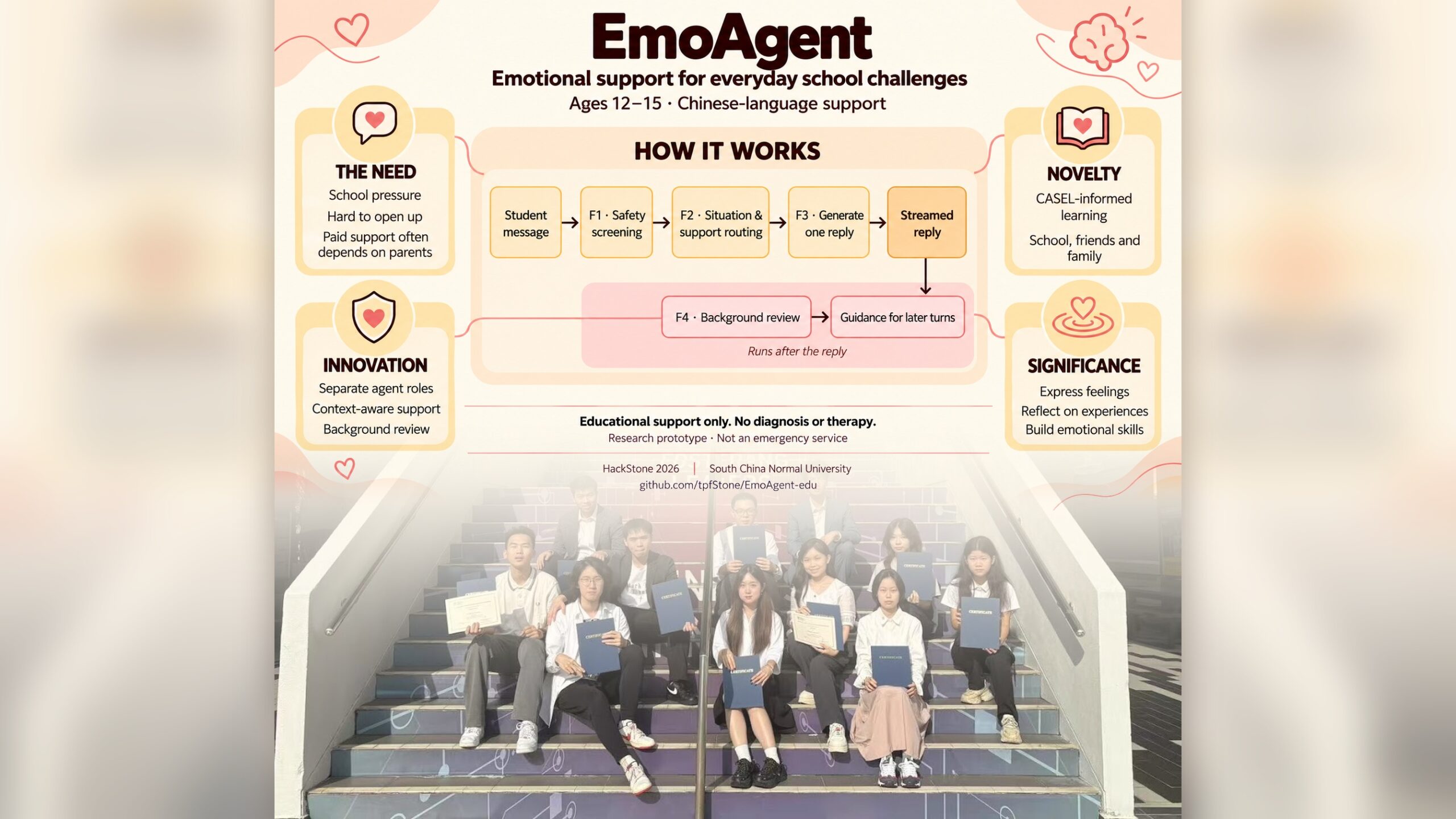
EmoAgent is a Chinese-language multi-agent dialogue system that supports social and emotional learning for junior-high…
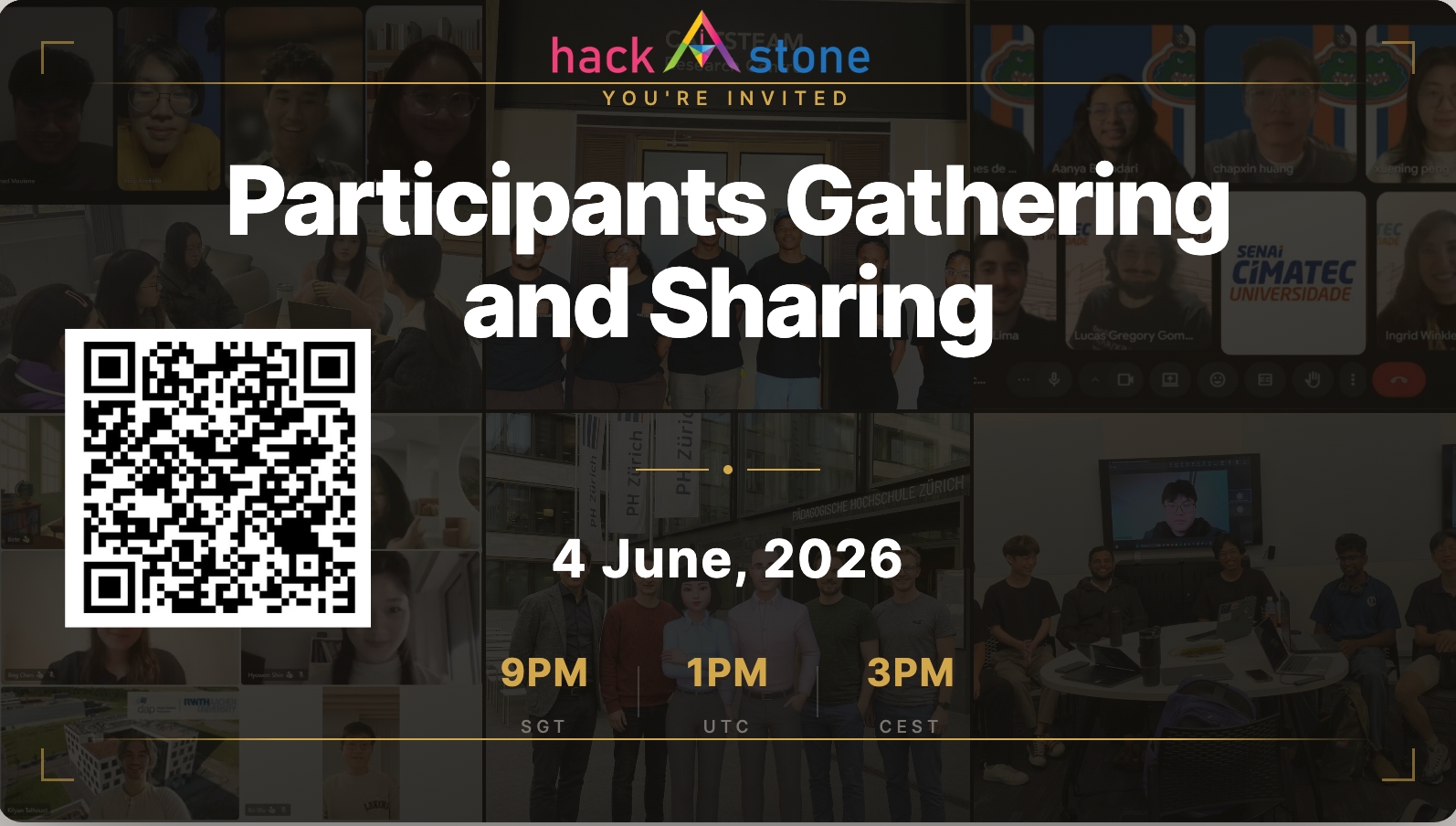
[Past Event] HackaStone Participants Gathering and Sharing
Meeting Record link
Meeting Summary:
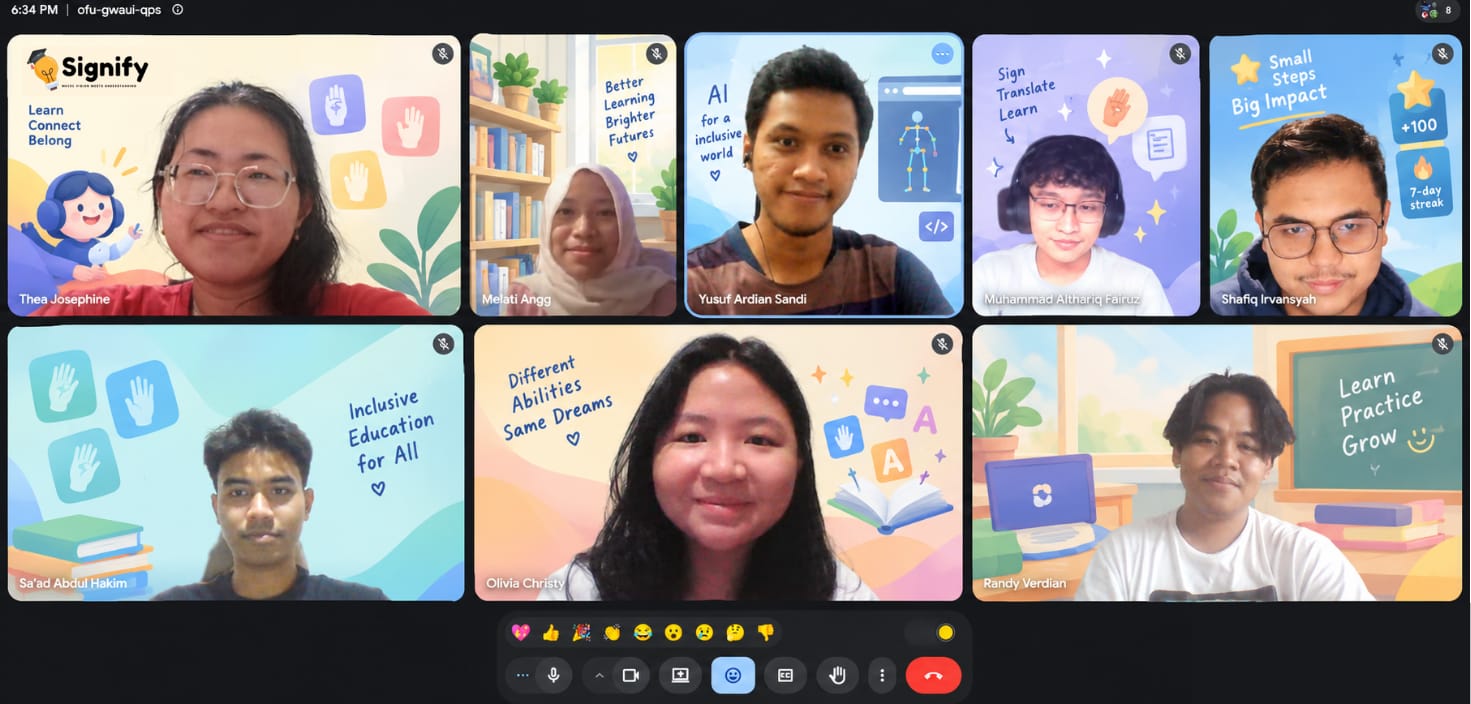
On 4 June 2026, Professor Cai Yiyu from Nanyang Technological University (NTU), Singapore, hosted an interactive HackaStone participant sharing session that brought together teams from universities across Asia, Europe, and the Americas. The session showcased how students and faculty are applying agentic AI to educational challenges ranging from STEM instruction and study planning to accessibility, workplace communication, immersive safety training, and child creativity development.
Professor Cai opened the session by describing HackaStone as a new global model that combines the spirit of a hackathon with the depth of a capstone project. He explained that the initiative grew from earlier conversations with collaborators across Europe and has now expanded to around 50 participating universities in its first edition. He also reminded participants of the upcoming submission deadline on 1 July, followed by semifinals and finals, framing the current cohort as an early community helping shape the future of agentic AI in education.
The project presentations revealed a strong shared belief: AI in education becomes most valuable when it is adaptive, context-aware, and meaningfully integrated into the learner’s experience rather than used as a generic chatbot.
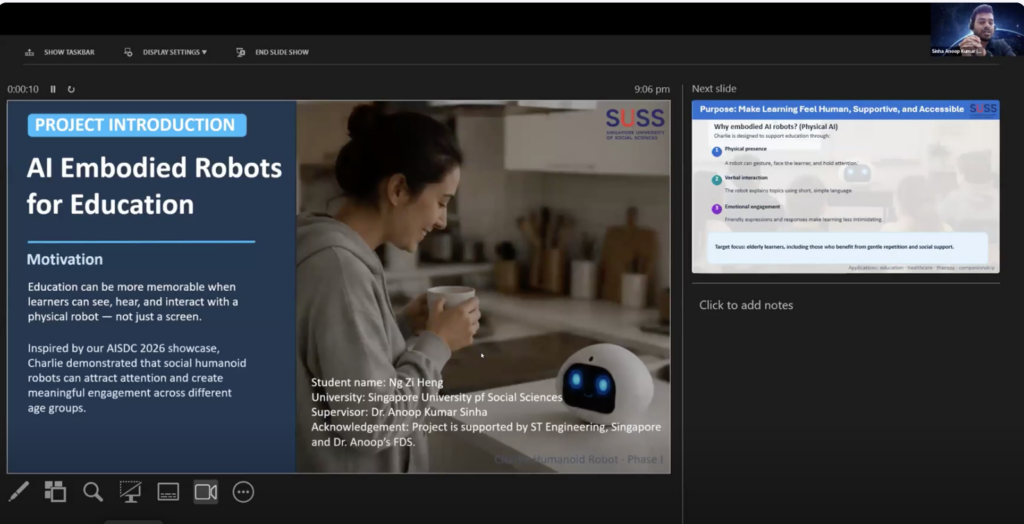
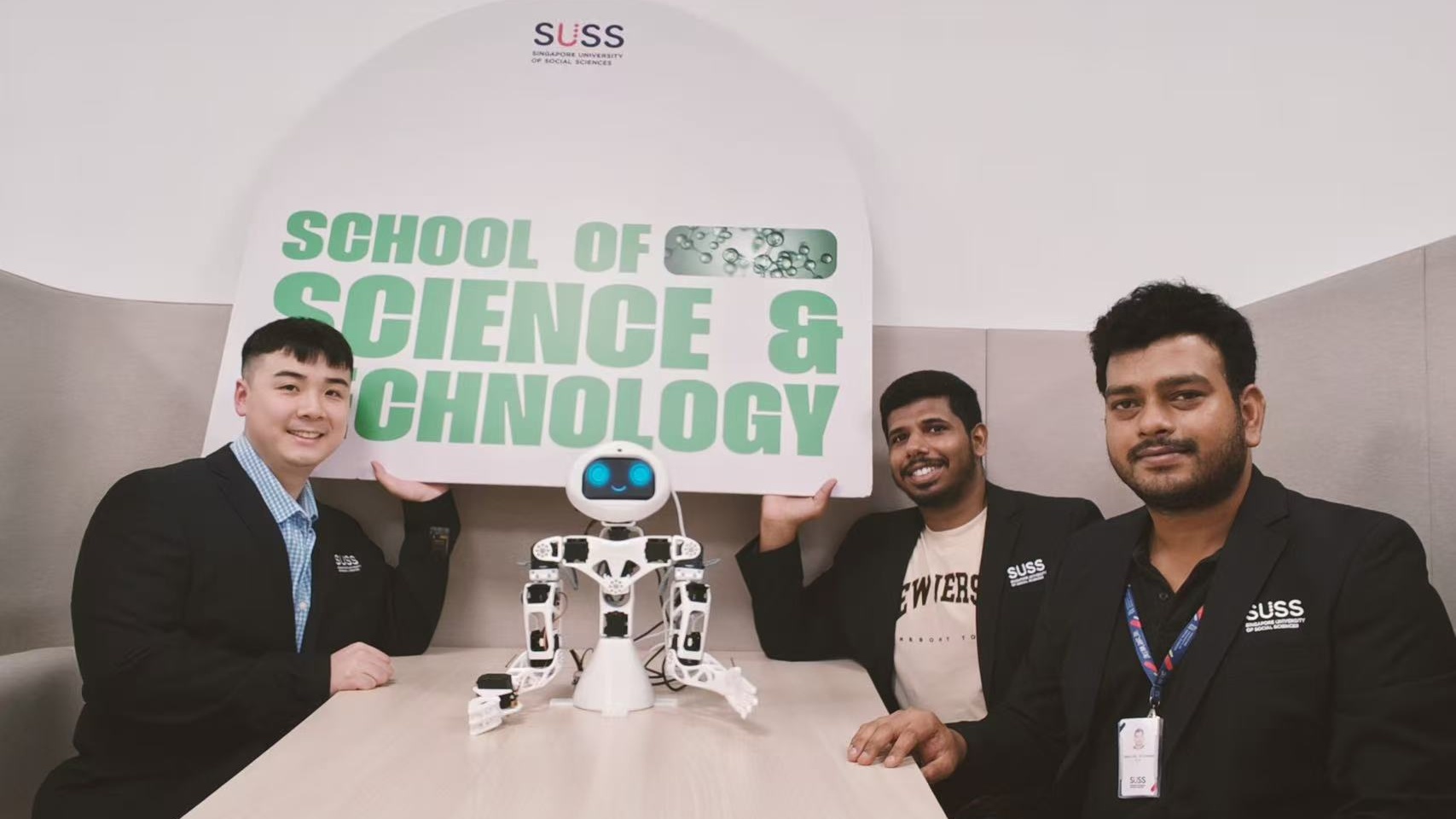
A team from the Singapore University of Social Sciences presented Charlie, an embodied humanoid robot designed for STEM teaching. Their approach focuses on making education more memorable through physical interaction, with the robot teaching topics such as cell structure and then engaging students in follow-up Q&A.
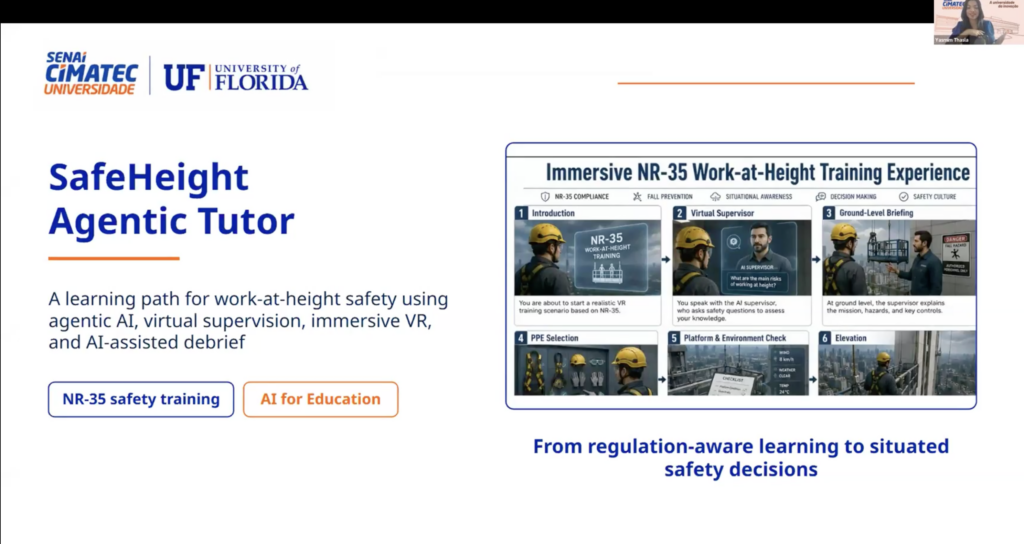
A Brazil-Florida collaboration presented a work-at-height safety training pathway that combines microlearning, grounded AI support, virtual supervision, immersive VR, and AI-assisted debrief. Their system aims to shift safety education from passive memorization of rules to active decision-making in realistic, high-risk scenarios, while also using sentiment analysis to detect learner hesitation and stress.
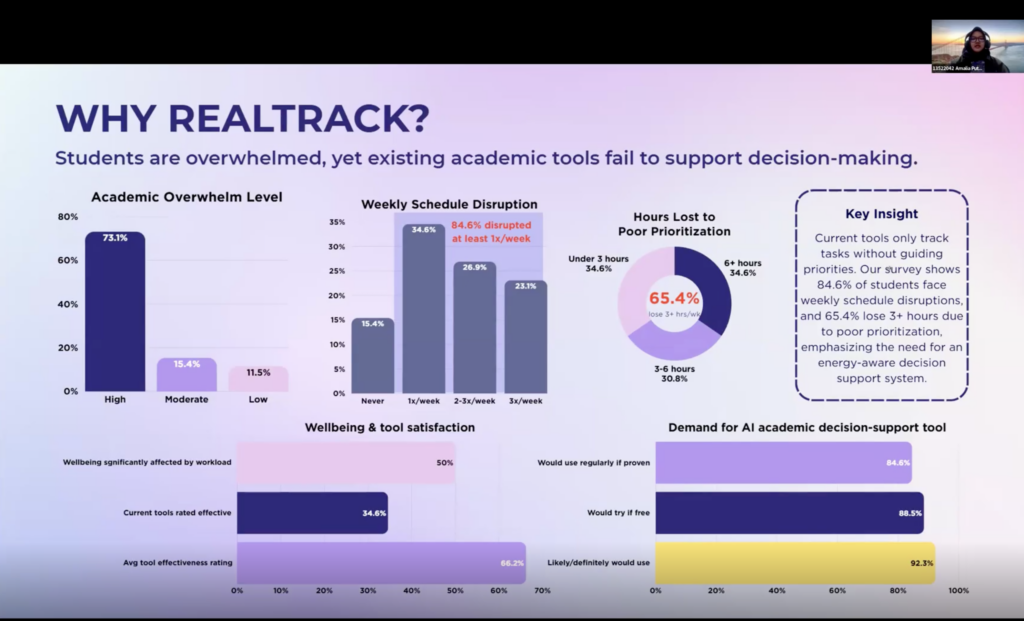
An Indonesian team from Bandung Institute of Technology presented RealTrack, a student productivity and study-support platform built around a simple but important insight: many existing study tools track tasks but do not help students prioritize them. RealTrack addresses academic overwhelm by helping students calculate passing targets, rank task value, plan realistic weekly schedules, generate flashcards and quizzes from their own materials, and learn from mistakes through AI-supported review.
A Tsinghua University team introduced an emotion-recognition concept using eye-tracking and retina data to infer emotional and cognitive states in adolescents. Although that presentation leaned more toward sensing and platform development than direct classroom application, it reflected growing interest in affect-aware educational technologies.
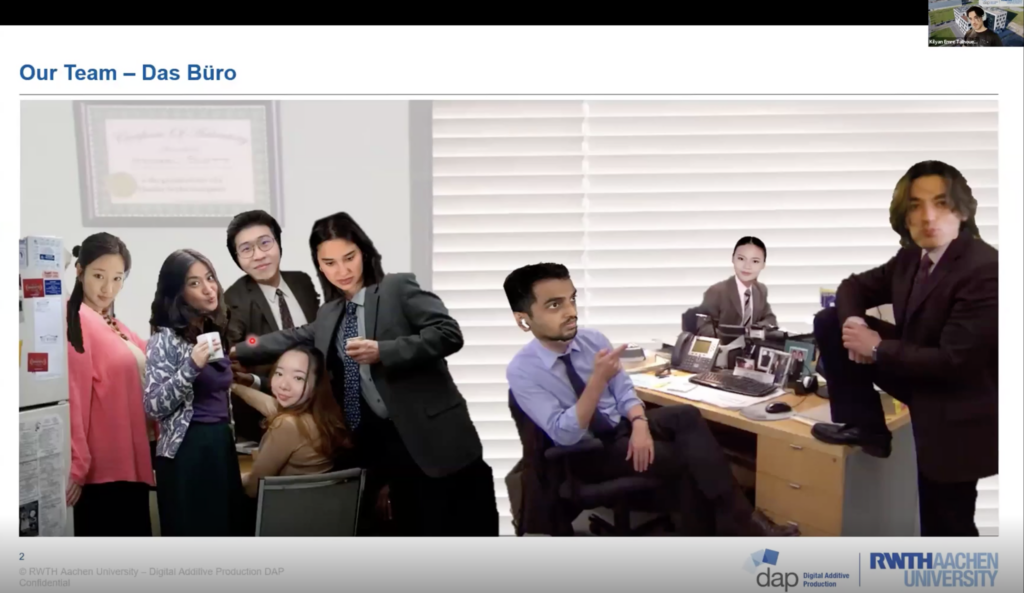
RWTH Aachen University in Germany presented a VR training environment for additive manufacturing. Their system uses agentic AI to answer learner questions, cite machine-specific documentation, and guide operators step by step through complex and potentially hazardous procedures. Their emphasis on source-grounded responses showed a clear awareness of the risks of AI hallucination in technical education.
The team focused on abstract concept learning and accessibility. A mathematics team from Beijing University of Posts and Telecommunications presented ProbNova, a probability and statistics platform combining interactive experiments and chapter-specific AI support. A Brazilian team proposed a VR quantum cryptography lab where an AI agent captures learner responses and performs sentiment analysis without interrupting immersion. An ITS team from Indonesia presented EduVent, a gamified learning management system that turns assignments into quests and helps students build portfolios. An Indian team from BV Raju Institute of Technology introduced EcoLearn, which personalizes explanations by mapping academic concepts onto each student’s own interests, such as football, gaming, or Formula.
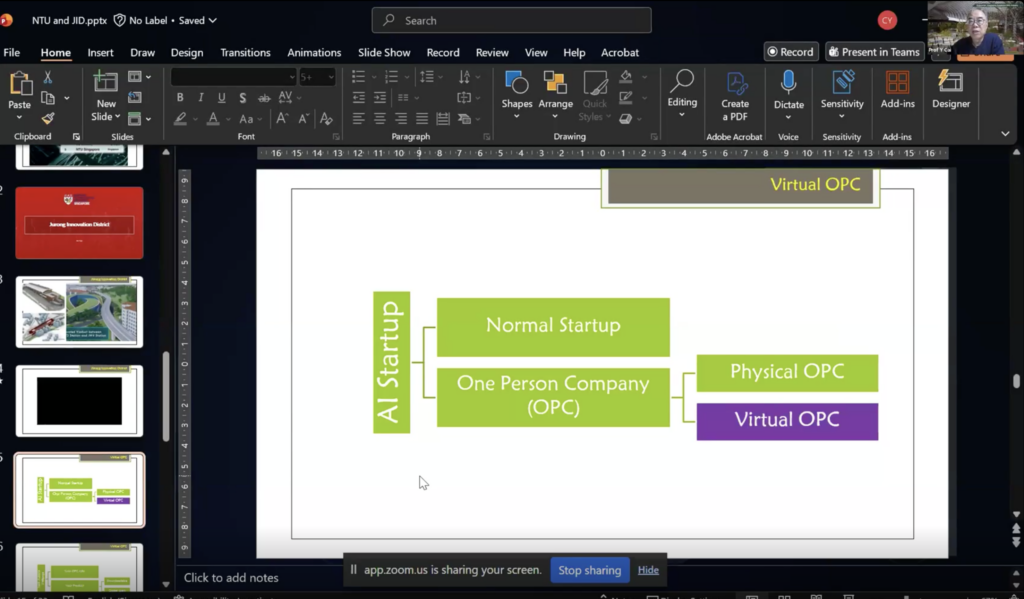
After about an hour of student presentations, Professor Cai used the session to describe NTU’s broader innovation ecosystem. He introduced NTU’s campus, rankings, and the Jurong Innovation District, emphasizing NTU’s ambition to connect students, startups, industry, and research in one environment. He also proposed a distinctive concept: the possibility of “OPC” or one-person companies, including virtual OPCs, that could be affiliated with HackaStone and potentially featured on the HackaStone website for broader exposure and product testing.
He also clarified the broader mission of HackaStone. In his explanation, HackaStone is not merely a competition. It is intended as a global platform for curriculum-based innovation, cross-university collaboration, and future commercialization. He encouraged participants to help promote the model, join future ambassador programs, and even form joint teams across institutions and countries. He repeatedly described the participants as the first generation of AI natives and positioned them as pioneers building the early landscape of agentic AI for education.
The later project presentations reinforced the diversity of the field. Gunadarma University’s Brain Novi combined academic writing support with learning analytics and tutorial tools. NTU’s own Minesweeper team proposed a multi-agent diagnostic system for mathematics learning that evaluates not only knowledge but also mindset, motivation, resilience, and metacognition. The University of Turku in Finland presented a voice-powered simulation platform for workplace communication training. HUNA AI, an international team from Indonesia and China, focused on preserving children’s creativity through talent discovery, guided challenges, and a safe sharing platform. Telkom University presented CodeMode AI for visually impaired learners, emphasizing active reasoning and personalized audio-first learning rather than passive accessibility tools. Nanyang Polytechnic presented an AI study assistant that builds realistic, personalized weekly study plans from class schedules and learning materials.
Across all presentations, several themes stood out clearly. First, personalization is central: teams are using AI to adapt learning by student interests, schedules, emotional state, performance patterns, accessibility needs, or professional context. Second, multimodal and immersive education is gaining momentum, with projects using VR, embodied robots, audio-first systems, and interactive experiments. Third, there is strong awareness that AI quality matters; many teams explicitly discussed hallucination control, source grounding, critic agents, or evidence-based design. Finally, the event demonstrated that “education” in the HackaStone context is defined very broadly, covering higher education, K-12, vocational learning, workplace preparation, accessibility, and even child creativity.
The session ended with a practical question about submission expectations. Professor Cai directed participants to the HackaStone website, especially the Spotlight page, where judging criteria are listed. He clarified that there is no rigid submission template; instead, teams should focus on innovation, novelty, and product maturity.
Overall, the meeting showed that HackaStone is evolving into more than a project competition. It is becoming a gathering point for a new generation of student builders, researchers, and educators who are exploring how agentic AI can make learning more adaptive, engaging, inclusive, and globally connected.

Related Posts
This Post Has 0 Comments